Description
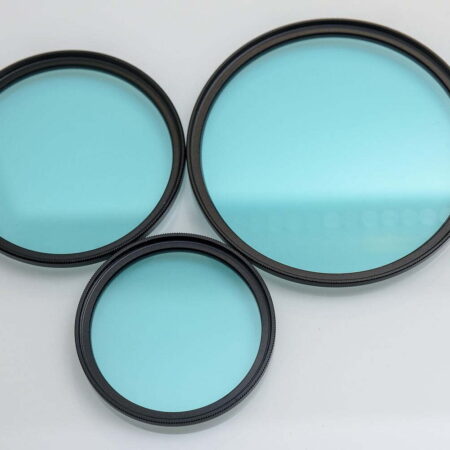
This modification removes the UV/IR blocking filter ( Hotmirror ) from your camera and replaces it with a neutral filter. With this modification the maximum sensitivity of the camera sensor for UV radiation, for visible light and for infrared radiation is guaranteed. The sensitivity of the sensor starts (depending on the model) at approx. 300-320 nm and ends at 1,100-1,200 nm.
After the conversion, the camera is suitable for all forensic examinations. This includes building forensic examinations, forensic medical examinations and art restoration techniques. However, suitable spectral filters (long-pass, short-pass or band-pass filters) and special light sources are always required for meaningful use. A fully developed and extensively tested filter set for building forensics can be ordered from Prof. Andreas O. Rapp. Special lamps and accessories for the analysis of wooden instruments can be ordered from Shop-Schilbach .
Attention: You must always activate LiveView with a converted DSLR camera as soon as you use a filter on the camera. Without LiveView, the camera cannot focus properly. Mirrorless cameras from the EOS M and EOS R series do not have this limitation and work much better as a forensic camera.
Attention: Many native EOS RF and RF-S lenses are only of limited use in dark light situations. An Infrared LED is installed inside the lenses. Stray light can be visible in the photos with long exposure times and / or dark lighting conditions (even with long exposures with ND filters). If EF lenses are used with an adapter on an EOS R camera, there is no risk of this happening.
Note: For cameras with a *, the automatic sensor cleaning function is lost during conversion. After the conversion, the sensor can be cleaned dry (e.g. with compressed air) or wet (e.g. with swabs) as usual. All preparations and methods available on the market for sensor cleaning can be used.