
Description
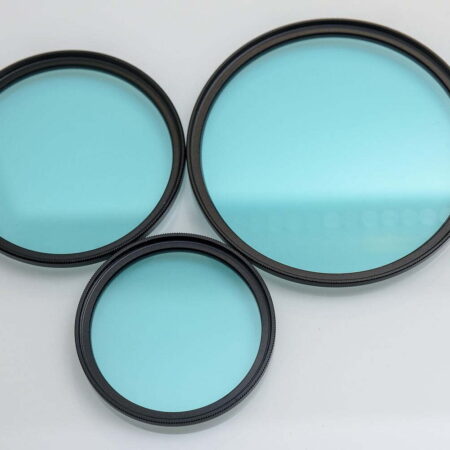
This modification removes the UV/IR blocking filter ( Hotmirror ) from your camera and replaces it with a neutral filter. With this modification the maximum sensitivity of the camera sensor for UV radiation, for visible light and for infrared radiation is guaranteed. The sensitivity of the sensor starts (depending on the model) at approx. 300-320 nm and ends at 1,100-1,200 nm.
After the conversion, your camera is suitable for all forensic examinations. This includes building forensic examinations, forensic medical examinations and art restoration techniques. However, suitable spectral filters (long-pass, short-pass or band-pass filters) and, if necessary, special light sources are always required for meaningful use. A fully developed and extensively tested filter set for building forensics can be ordered from Prof. Andreas O. Rapp. Special lamps and accessories for the analysis of wooden instruments can be ordered from Shop-Schilbach .
Note: For cameras with a *, the automatic sensor cleaning function is lost during conversion. After the conversion, the sensor can be cleaned dry (e.g. with compressed air) or wet (e.g. with swabs) as usual. All preparations and methods available on the market for sensor cleaning can be used.
Note White Balance: With practically all Nikon cameras, the white balance cannot be set correctly in the camera. Depending on the lighting situation and filter, manual white balance in the camera is not possible and returns an error message (the problem also occurs with the InfraBlue filter). The white balance can be set to 2500K with color correction, but a clear magenta color cast usually remains in the image. When photographing in RAW (recommended), however, this does not matter because the white balance can be set correctly on the PC. Photographing black and white JPEGs in the camera is also possible without any problems.
Note Line Pattern: Some Nikon Z series users report line artifacts in infrared images. With a very high contrast image processing, lines of the AF system may become visible on the images. The chance increases with stronger IR filters, with weak filters the effect seems to be less pronounced. The lines are also only visible with very strong post-processing of contrast, clarity (Local Contrast) and/or haze removal.